Your basement just flooded, or maybe a pipe burst in the kitchen. Now what? You're probably staring at wet drywall, soaked flooring, and a monumental headache. When it comes to emergency water cleanup, restoration companies generally talk about two main approaches: either drying everything in place, or tearing out all the wet stuff and replacing it. I've seen both methods used in homes all over Baldwin, from the older places downtown to the newer builds up towards Lula, and honestly, each has its time and its place.
Dry-in-Place: The Less Invasive Option
This method is pretty much what it sounds like. We bring in specialized equipment—think air movers, dehumidifiers, sometimes even injecti-dry systems for walls—and we dry out the affected materials right where they are. The whole idea is to pull out moisture quickly and thoroughly enough to stop mold from growing and prevent more damage, without having to demo anything.
Pros of Dry-in-Place:
- Cost: Generally, it's cheaper. You're paying for equipment rental, monitoring, and the crew's labor to set up and manage the drying, not for demolition, hauling away debris, then buying and installing new materials.
- Time: It's usually faster, too. No waiting for new drywall to show up, no scheduling different trades for flooring, painting, and so on. Once it's dry and we've verified it, you're basically done.
- Less Disruption: Your home doesn't turn into a construction zone. You won't have dust everywhere, and you're not living with big holes in your walls or exposed subflooring. It's a lot less invasive for your daily routine.
- Durability: If we do it right, and the materials can be saved, the original structure keeps its integrity. You're not bringing in new stuff that might not match perfectly or wear differently.
Cons of Dry-in-Place:
- Effectiveness: It just doesn't work for every situation. Highly porous materials, like thick carpet padding soaked for days, or drywall saturated with contaminated water (like sewage), usually can't be saved.
- Hidden Issues: Sometimes, you can't see all the damage. If water sneaked behind a vapor barrier or into a really tight spot, it can be tough to dry completely, which could lead to mold later on.
- Maintenance: Once it's dry, there isn't any special maintenance, really. The goal is just to get it back to how it was before the water hit.
- Appearance: If materials warp or stain during the drying process, even if they're structurally sound, they might not look as good as new.
Tear-Out & Replace: The Fresh Start
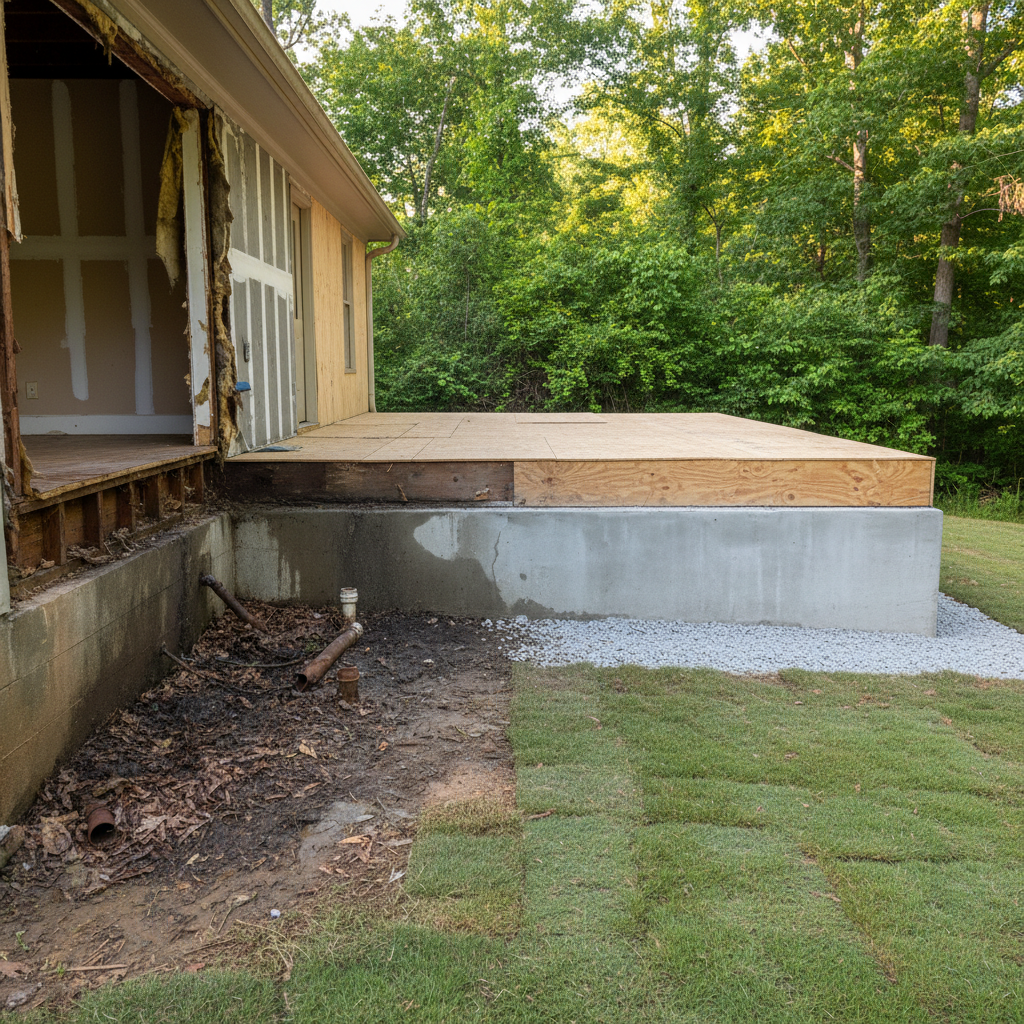
This approach means we remove all the wet, damaged materials. That could be drywall, insulation, flooring, baseboards—anything that's been compromised. We dry out the exposed structure (like the studs and subfloor), treat for mold if needed, and then rebuild with new materials.
Pros of Tear-Out & Replace:
- Certainty: You know for sure that all the wet, potentially contaminated material is gone. This is super critical for sewage backups or long-standing water issues where mold is a big risk.
- Mold Prevention: By removing everything, you get rid of any potential breeding ground for mold and can treat the exposed structural elements directly.
- Appearance: You get a fresh start. New materials mean everything looks brand new, often even an upgrade from what was there before if you pick something different.
- Durability: New materials, when installed correctly, should last just as long as the originals, if not longer.
Cons of Tear-Out & Replace:
- Cost: It's almost always more expensive. You're paying for demolition, debris removal, and then the cost of all new materials plus the labor to install them. This can really add up.
- Time: It takes a lot longer. Demolition, drying the exposed structure, ordering materials, and then rebuilding can stretch out for weeks, sometimes even months, depending on how big the job is.
- Disruption: Your home becomes a construction zone. Dust, noise, open walls—it's a major inconvenience, no two ways about it.
- Matching Issues: Sometimes it's tough to perfectly match new flooring or paint to existing areas, especially in older homes around Baldwin where original materials might be hard to find.
Which One Should You Choose?
Honestly, it really depends on a few key factors. First, the type of water. Clean water from a supply line burst is very different from gray water (like from a washing machine overflow) or black water (sewage). Black water almost always means tear-out for health reasons.
Second, the duration. How long have the materials been wet? If it's been more than 48-72 hours, especially during our humid Baldwin summers, mold becomes a serious concern, and tear-out looks like a much stronger option for porous materials.
Third, the material itself. Solid wood floors might be salvageable with dry-in-place, but laminate flooring or particle board cabinets are usually toast once they've absorbed water.
Here at Pacific Restoration, we always assess the situation thoroughly before recommending a path. We'll measure moisture levels, consider the type of water, and look at how bad the damage is. My recommendation for most typical water damage scenarios in Baldwin, especially if you catch it early and it's clean water, is to try and dry-in-place first. It saves you money, time, and a whole lot of headaches. However, if there's any doubt about getting it completely dry, or if health risks are involved, then tearing out and replacing is the only responsible choice.
Don't try to guess. Get a professional assessment. We can walk you through the options, explain why one is better than the other for your specific situation, and get your home back to normal.